Empowering educators in health professions
The A.T. Still University (ATSU) Faculty Leadership and Academic Resilience in Education (FLARE) Fellowship is a collaborative initiative designed to nurture and empower aspiring faculty by addressing the need for diverse voices in health professions education. This initiative reflects ATSU’s deep commitment to fostering a diverse, inclusive, and equity-driven academic community.

This program supports the development of current faculty, clinical educators, and students from across the country, helping to build a more representative and resilient academic community. Beginning in May each year, fellows participate in a three-day in-person workshop at ATSU’s Mesa, Arizona campus, followed by a three-month period of asynchronous learning, teaching, and mentorship through July 29.
Foundational skills for teaching success
Throughout the fellowship, participants will engage in a curriculum that emphasizes key focus areas, including cultural proficiency, the culture of faculty roles, diverse learning styles, classroom community building, and professional networking. The program nurtures a culture of teaching excellence and prepares fellows to thrive as educators and leaders in health professions education.
By the end of the fellowship, participants will be able to:
- Identify key pedagogical principles to develop thoughtful, engaging teaching sessions adaptable to fast-paced clinical or classroom settings.
- Apply introductory frameworks for equitable student assessment and deliver constructive feedback contributing positively toward student growth.
- Articulate an initial teaching statement aligning your personal values with your emerging identity as a health professions educator.
- Practice core self-reflective techniques to process feedback, cultivate resilience, and prevent early-career burnout.
- Draft a preliminary one- to three-year career development roadmap identifying key personal goals, potential mentors, learning opportunities, and advancement and promotion pathways.
- Recognize organizational structures within your institution to build peer networks and initiate formal or informal collaborative teaching opportunities.
Dates: April 30-May 2, 2027
Theme: The Educator's Journey: Developing Excellence, Identity, and Impact in Health Professions Education
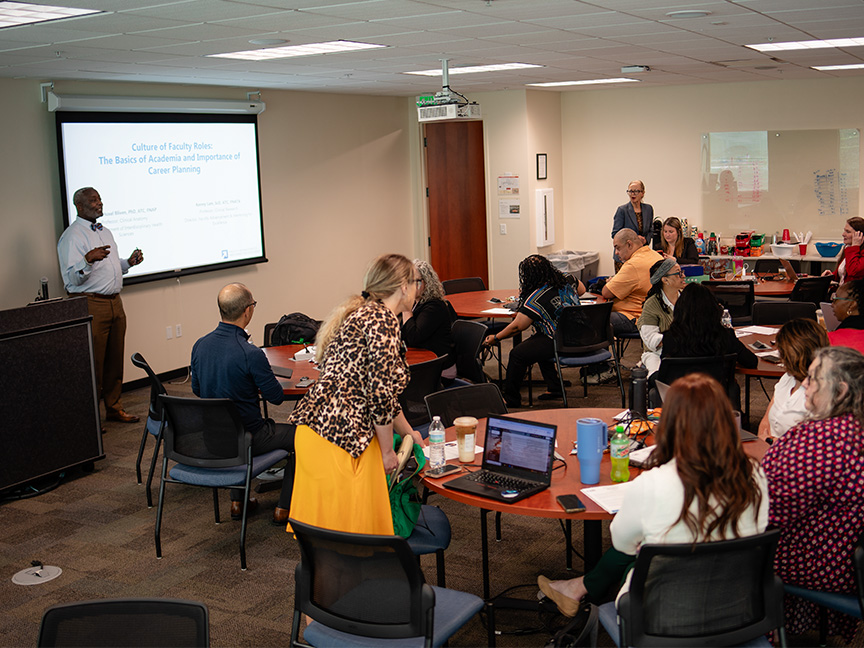

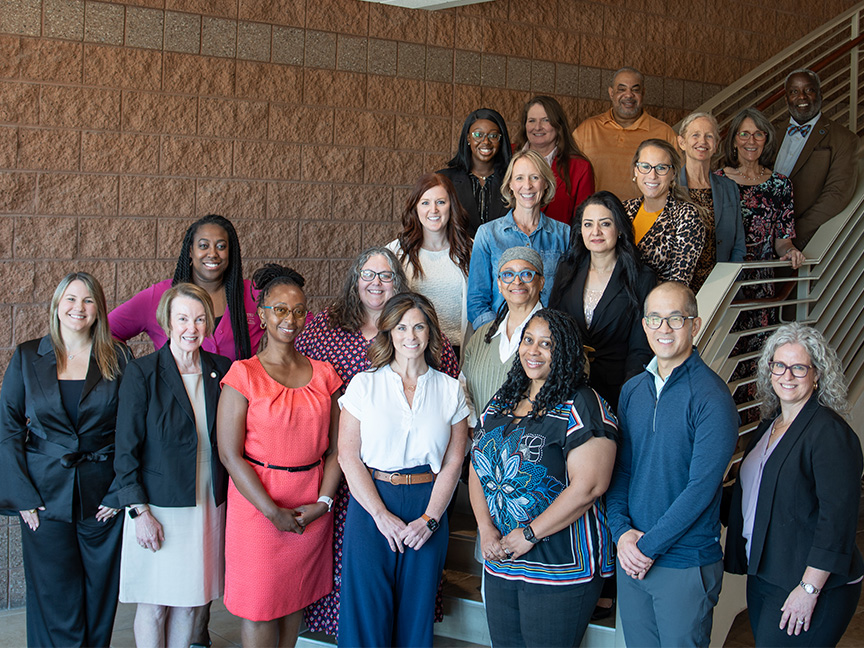

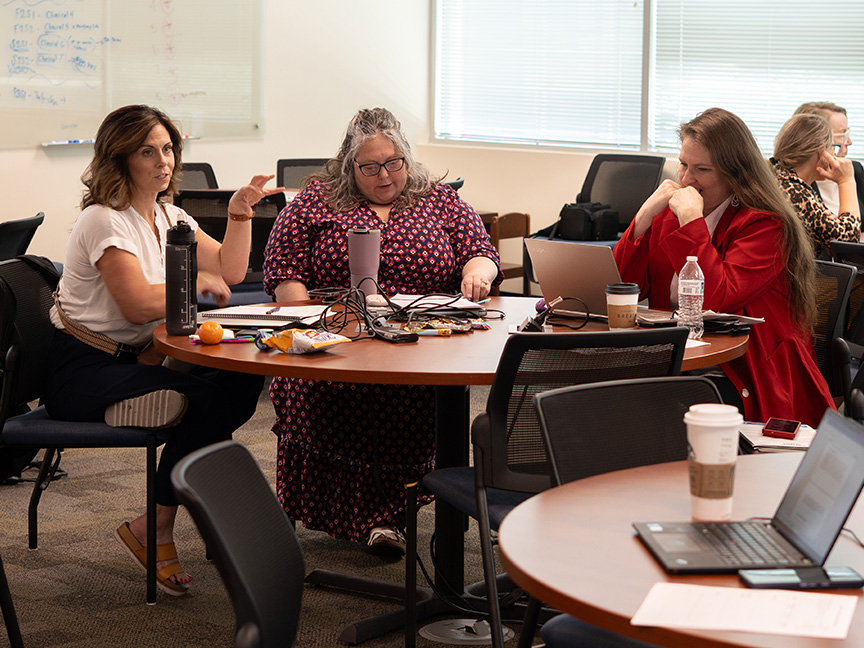
Explore the FLARE Fellowship experience
The FLARE Fellowship is more than a professional development opportunity—it’s a transformative journey into inclusive leadership and excellence in health professions education. Through a carefully designed agenda, the fellowship offers a blend of immersive learning, community building, and personal reflection. Fellows engage with renowned educators and thought leaders while receiving support from dedicated faculty mentors. This unique structure ensures participants are supported, challenged, and empowered from day one through program completion.
ATSU-Diversity-2024-Ann-Report-Cultural-Proficiency-DIG
Voices of expertise
The FLARE Fellowship features dynamic speakers who are leaders in health professions education. They bring diverse perspectives and deep expertise in areas like cultural proficiency, mental health, and inclusive teaching—empowering fellows with tools to lead and inspire.

Dr. Bliven is Chair of the Department of Interdisciplinary Health Sciences at ATSU, where she also serves as professor and director of clinical anatomy. She co-teaches human anatomy for dental, occupational therapy, and physical therapy programs on the Mesa campus, having previously taught in ATSU’s Kinesiology and Athletic Training programs as well as Indiana State University’s Athletic Training Department. Her research on shoulder function and health addresses mechanisms of shoulder stability, muscle activation during rehabilitation, adaptations in the throwing shoulder, and quality of life in throwing athletes. In addition to directing the Interdisciplinary Research Laboratory, she is vice chair of the Institutional Review Board at ATSU-Mesa. Dr. Bliven edits the Journal of Sport Rehabilitation and contributes to professional committees such as the BOC Exam Development Committee. She holds a BS in Biology and Physical Education from Denison University, an MS in Kinesiology from Indiana University, and a PhD in Kinesiology with an Athletic Training emphasis from Temple University.

Dr. Burch has served as Dean of ATSU’s Arizona School of Health Sciences since 2019, after holding roles as vice dean and Chair of the Physical Therapy Department (2008–2012). She earned her EdD (2005), MPH (2002), and MSPT (1989) from Columbia University and completed a postdoctoral fellowship in Health Disparities at Teachers College, Columbia. Her scholarly interests focus on healthcare providers’ knowledge, attitudes, and self-efficacy toward underrepresented patient groups, as well as higher education leadership during times of crisis. Dr. Burch authored A Guide to Physical Therapy and co-investigated an NIH grant exploring exercise programs for breast cancer survivors in Puerto Rico. She has held clinical, administrative, and faculty positions at institutions including the University of Puerto Rico, Mercy College, and Long Island University. A 2025 National Academies of Practice Distinguished Scholar Fellow, she has lived and worked internationally in Greece, Taiwan, India, and Puerto Rico.

Dr. Maldonado De la Rosa is an assistant professor in ATSU’s Speech-Language Pathology Graduate Program. She earned her PhD in Second Language Research from Interamerican University of Puerto Rico, an MS in Speech-Language Pathology from Universidad Ana G. Mendez, and a BS in Biology from the University of Puerto Rico, Rio Piedras. Prior to ATSU, she worked as a bilingual SLP and pediatric feeding specialist in settings ranging from skilled nursing facilities to telehealth. Her research focuses on Speech-Language Pathologists’ approaches to code-switching when working with culturally and linguistically diverse clients. She serves on the board of ASHA’s Hispanic Caucus and holds training as a University Innovation Fellow from Stanford and in bio-entrepreneurship from California State University I-Corps.

Dr. Hastie is Dean of the College of Graduate Health Studies at ATSU and a Fellow of the American College of Sports Medicine. She holds an EdD from George Fox University (2013), an MS in Exercise and Sport Science (biomechanics) from the University of Oregon (2003), and a BS in Exercise Science from Gonzaga University (2001). Previously, she was Professor and Program Chair of Exercise Science at Lasell University, where she also served as Faculty Fellow for the Fuss Center for Research on Intergenerational Education and Aging. Dr. Hastie chairs ACSM’s Ethics and Professional Standards Committee and serves on its Exercise Is Medicine Underserved and Community Health Committee; she is also an HLC Peer Reviewer. Her research explores lifelong physical activity’s impact on health outcomes, the exercise–cognition relationship, and discrimination’s effects on health-related coping behaviors. With over 20 years of experience in synchronous and asynchronous teaching, she developed an online MS in Nutrition for Human Performance and champions collaborative, inclusive learning environments for students and faculty alike.

Dr. Lam is Professor and Director of the Department of Interdisciplinary Health Sciences at ATSU, with a BS in Athletic Training, an MEd in Human Movement, and an ScD focused on Movement Sciences—all from Boston University. He completed a postdoctoral fellowship in patient-oriented outcomes research at ATSU’s Center of Clinical Outcomes Studies. His current research examines how lower extremity sports injuries affect patient-oriented outcomes such as health-related quality of life. In addition to his teaching, Dr. Lam directs Faculty Advancement and Mentoring for Excellence (FAME), leads the Athletic Training Practice-Based Research Network (AT-PBRN), and serves as vice chair of ATSU-Mesa’s Institutional Review Board. He sits on the NATA Foundation’s Research Committee and Athletic Training Research Committee, and he is on the editorial boards of the Journal of Athletic Training and Journal of Sport Rehabilitation. A 2022 Fellow of the National Athletic Trainers’ Association, he practiced as a certified athletic trainer at Boston University, Rutgers–New Brunswick, and MIT before joining ATSU.

Dr. Normore serves as Chief Diversity Officer and Instructor at ATSU, having previously been Vice President for Diversity & Inclusion and the inaugural director of diversity since 2013. He oversees a comprehensive initiative spanning ATSU’s seven graduate health professions schools (Kirksville, St. Louis, Mesa, San Luis Obispo, and online), extending into community health centers to advance ATSU’s mission of serving underserved populations. A 2015 NIMHD Scholar, he is trained as a Civil Rights Investigator (ATIXA), Campus Security Authority, and Safe Zone Master Trainer. Under his leadership, ATSU earned the HEED Award for inclusive excellence from 2017–2024; he has embedded cultural proficiency across curricula and campus culture. Before ATSU, he was Director of Multicultural Student Affairs at Oklahoma City University (2001–2013), where he supervised international student life, advised student organizations, and created scholarship and bridge programs that improved retention and graduation. Dr. Normore has delivered national workshops on diversity, serves as faculty at ATSU’s Missouri and Arizona dentistry schools, and is active in Omega Psi Phi Fraternity, Inc., chairing its community-oriented policing committee. His diverse background includes roles as a police officer, business owner, teacher, coach, and member of the 1988 University of Kansas national championship basketball team. He holds an EdD from ATSU, an MBA from Oklahoma City University, and a BS from the University of Central Oklahoma.

Dr. Sexton is the Associate Dean for medical education and tenured professor for ATSU-Kirksville College of Osteopathic Medicine’s Department of Family Medicine. Dr. Sexton earned a Bachelor's degree in Biology from Rockhurst University, a Master's degree in Molecular Microbiology from the University of Missouri School of Medicine, and a Doctoral degree in Medical Education from ATSU. She was founder and an inaugural member of the National Academy of Osteopathic Medical Education and continues as an active fellow. Additionally, she completed the American Osteopathic Association Osteopathic Heritage Foundation Health Policy Fellowship. Dr. Sexton currently serves on the Arnold P. Gold Foundation Board and the Gold Humanism Honor Society Advisory Council. She has served on the AACOM Professionalism and Ethics Task Force, the Project on Empathy in Osteopathic Medical Education, and many others. Most recently she has consulted for the Michigan State College of Osteopathic Medicine Institute for Global Health in areas of Curriculum and Assessment and Faculty Development.

Ms. Taylor is a Licensed Professional Counselor (GA, MI, AZ), Licensed Professional Clinical Counselor (CA), Clinical Mental Health Counselor (UT), and National Certified Counselor with over a decade of experience in inpatient psychiatric, community-based, and higher education behavioral health settings. She holds an MS in Counseling and Certifications in Multiple Treatment Modalities. Throughout her career, she has supported young adults, adults, and families facing obsessions, compulsions, mood and personality disorders, anxiety and trauma, addictive behaviors, conduct disorders, abuse, anger and stress management, teen issues, relational problems, dating violence, self-harm, criminal thinking, and more. Her therapeutic approach is grounded in Cognitive Behavioral Therapy, supplemented by Person-Centered, Psychodynamic, Dialectical Behavioral Therapy (DBT), Acceptance and Commitment Therapy (ACT), and Motivational Interviewing (MI). Emphasizing the mind-body-spirit connection, she helps clients replace irrational thoughts with healthier alternatives and believes that hope and tools for change are keys to transformative growth.

Dr. Konecny joined ATSU in 2005, working in the Department of Student Affairs. In 2009, she transitioned to a full-time faculty member position for A.T. Still University's College of Graduate Health Studies (ATSU-CGHS). As a full-time faculty member, Dr. Konecny teaches and designs didactic courses for the Master of Education in Health Professions and Doctor of Education in Health Professions programs. She also serves as doctoral research project chair for students in the Doctor of Education program.
Dr. Konecny has contributed to peer-reviewed and professional literature as an author, co-author, and peer reviewer. She has also been a presenter and held leadership roles in professional organizations. Dr. Konecny serves on several ATSU and CGHS committees and work groups. Dr. Konecny's research interests include the development, implementation, and evaluation of innovative teaching methodologies and introducing new technologies to enhance curriculum delivery and student learning; exploring ways to improve student wellness within various and diverse populations; exploring the practical application of health education behavior theories and the educational aspects of health promotion; examining learning theory in relation to online and residential instructional design; and assessing the effect and value of student services for the online learner.
Dr. Konecny holds a Doctor of Health Science degree from Nova Southeastern University and a Doctor of Health Education degree from ATSU-CGHS. She obtained her Master of Science degree in counseling/student personnel services from Emporia State University and a Bachelor of Science in behavioral psychology from Northern Michigan University. Dr. Konecny is a Master Certified Health Education Specialist (MCHES). She also held certified personal trainer and group fitness instructor credentials for about 20 years. Dr. Konecny is a former Major in the U.S. Army Reserves and an Army veteran who served in Saudi Arabia during Operation Desert Storm.
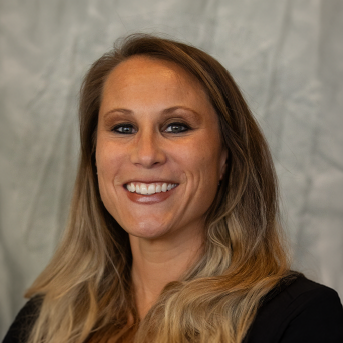
Presley Melvin-Dean is an academic advisor at the College of Graduate Health Studies, where she supports students across a variety of graduate-level programs. She was born and raised in Quincy, Illinois, a river town located about two hours north of St. Louis.
Presley earned her Bachelor's degree in Justice Systems from Truman State University, initially planning to pursue a career in law enforcement. However, life presented a different opportunity. After marrying her college sweetheart, she moved to Kansas City and worked as a security guard for the Kansas City Royals. This formative experience reshaped her perspective and sparked an appreciation for not planning life too much.
Presley and her husband later returned to their alma mater, so he could pursue his dream of coaching women's basketball at the collegiate level. This transition opened the door for Presley to begin her career in academic advising. During this time, she also earned a Master's degree in Leadership and a Master's in Public Health, all while growing her family and becoming a mother of two.
Presley is passionate about making a meaningful impact in every role she holds. She takes pride in doing her job well, helping others, and contributing in ways that matter.
In her free time, though it is a rarity these days, she enjoys taking walks with her new dog and savoring a well-earned cup of hot coffee.



Reflections from FLARE participants
The impact of the FLARE Fellowship lives on in the words of its participants. Fellows leave the program not only with sharpened skills and new knowledge, but with a renewed sense of purpose, belonging, and direction. Their testimonials speak to the transformative power of community, affirmation, and being seen. Read how the FLARE Fellowship has shaped careers, expanded networks, and inspired new futures.
"The FLARE Fellowship has been one of the most rewarding experiences of my professional journey. It strengthened my confidence as an educator, deepened my commitment to learner-centered teaching, and reaffirmed my belief that education is a powerful catalyst for opportunity, belonging, and personal transformation. Since completing the fellowship, I have accepted an appointment as an Adjunct Faculty Member with the University of Baltimore's Early College Initiatives Program."
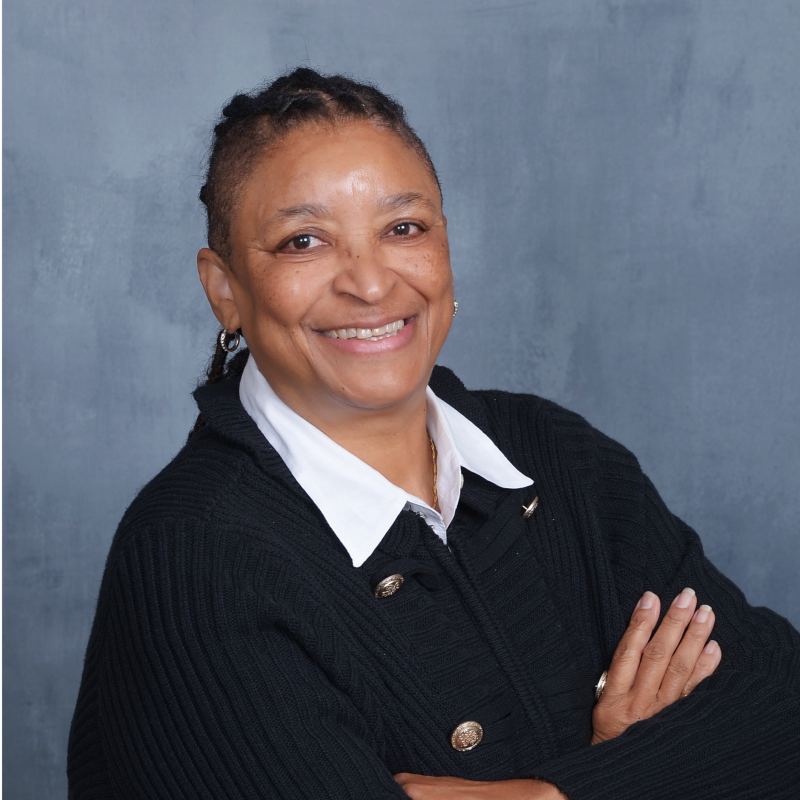
"After completing the first phase of the FLARE Fellowship, I am leaving with a full heart, a sharpened mind, and a renewed sense of purpose. I have been teaching for well over a decade, and one lesson keeps showing itself: good teaching requires constant reflection. I am grateful to the FLARE Fellowship for creating a space that challenges, encourages, and pushes us to think more deeply about who we are as educators and leaders."

“The FLARE Fellowship was a truly transformative experience. From the moment I arrived, I felt welcomed, inspired, and empowered. I discovered a community where I finally felt I belonged, and I left with both deep connections and renewed motivation to complete my doctoral research. FLARE’s commitment to uplifting underrepresented voices is unlike anything I have encountered. It is truly transformational.”

"The FLARE Fellowship exceeded every expectation. The hospitality, thoughtfulness, and attention to detail made the experience unforgettable. I felt valued, inspired, and deeply motivated, an opportunity I will carry with me far beyond the program."

"Participating in the FLARE Fellowship was such an honor. Meeting the fellows and hearing their stories was both rewarding and inspiring. It was a truly meaningful experience that left a lasting impact.”
